
How AI Is Changing Google Search

For years, Google Search was built around a relatively simple exchange: a user entered a query, Google returned a list of relevant webpages, and the user chose which result to click. Businesses and marketers learned to optimize for that system by targeting keywords, building authoritative websites, creating useful content, and competing for valuable positions in the search results. Today, that model is evolving. Artificial intelligence is changing not only how Google presents information, but also how users ask questions, explore topics, and discover businesses online.
One of the most visible changes is the introduction of AI-powered experiences such as AI Overviews and AI Mode. Instead of requiring users to sort through multiple search results to piece together an answer, these features can synthesize information from multiple sources and provide a more conversational response directly within Google Search. AI Overviews are designed to help users understand complex topics more quickly, while AI Mode is built for more nuanced questions, deeper exploration, and comparisons that may previously have required several separate searches.

This fundamentally changes the nature of a search query. Users are becoming more comfortable asking Google complete questions rather than entering a handful of keywords. Instead of searching for something broad like “digital marketing,” a user might ask, “What digital marketing strategy should a small business use with a limited budget?” AI-powered search can interpret the context behind that question and identify multiple related aspects of the topic. Google explains that AI features can use a process called query fan-out, in which related searches are performed across different subtopics and data sources to develop a more comprehensive response.
For businesses, this means that simply ranking for individual keywords is no longer the entire SEO conversation. Search intent matters more than ever. Your website needs to clearly demonstrate that it can answer the questions your audience is actually asking. Content that is shallow, repetitive, or created primarily to capture search traffic is becoming less valuable. Content that provides original information, demonstrates genuine expertise, answers meaningful questions, and gives users a reason to continue exploring can be much more valuable in an AI-driven search environment. Google itself continues to emphasize helpful, reliable, people-first content and says that these foundational SEO principles remain relevant to AI-powered search.
This does not mean traditional SEO is dead. In fact, Google explicitly states that the fundamental best practices of SEO continue to apply to AI Overviews and AI Mode. Pages still need to be crawl-able, indexable, technically sound, useful to visitors, and supported by strong internal linking and good page experiences. Google also states that there are no special AI-specific requirements or secret pieces of markup that guarantee inclusion in AI search features. In other words, businesses shouldn't abandon SEO in favor of chasing the latest “AI optimization” trick. The fundamentals still matter.
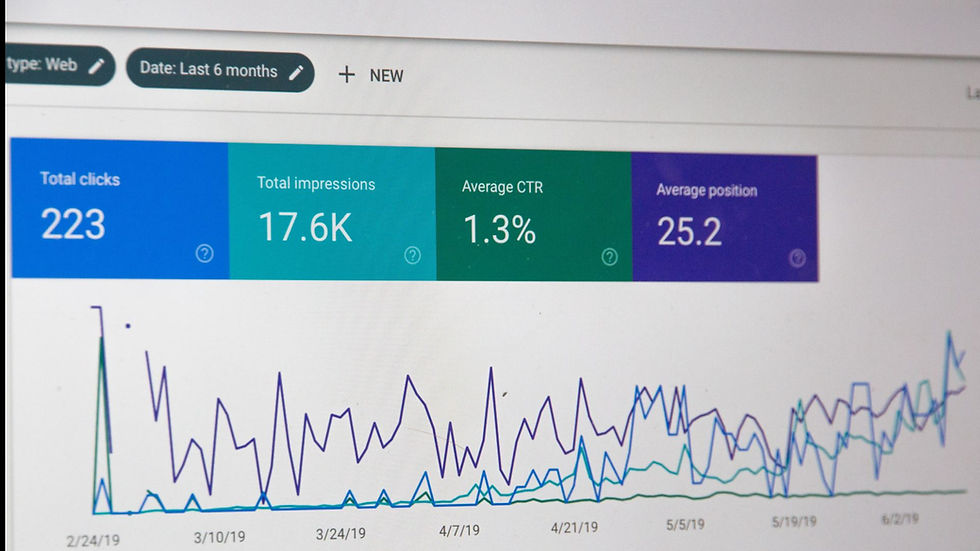
What is changing is how visibility is measured and where it occurs. A business may no longer receive visibility only by appearing as one of the traditional blue links. Its website can potentially become a supporting source within an AI-generated response, giving users another path to discover the business. Google has even introduced dedicated generative AI performance reporting in Search Console, allowing website owners to see impressions and pages appearing within generative AI features such as AI Overviews and AI Mode. As of August 31, 2026, Google says these insights have rolled out to websites worldwide.
There is also an important shift in the type of content businesses should create. Generic information is increasingly easy for AI systems to summarize, which makes simply repeating information that already exists across hundreds of websites a weak content strategy. Businesses have a stronger opportunity when they provide something that cannot be easily replicated: original research, first-hand experience, expert commentary, unique data, detailed case studies, local knowledge, demonstrations, examples, and genuinely useful resources. Google’s current guidance specifically emphasizes valuable, unique, non-commodity content as an important part of succeeding in generative AI search.
AI is also making search more multimodal. Users can increasingly interact with Search using combinations of text, images, and other forms of information rather than relying exclusively on typed queries. For businesses, that makes high-quality visual content more important, particularly for industries where customers rely heavily on images or video before making a decision. Google recommends supporting textual content with high-quality images and videos where appropriate and keeping information such as Business Profile and Merchant Center data up to date.
Perhaps the biggest misconception businesses should avoid is believing that AI has created an entirely separate version of SEO. It hasn't. There are certainly new search experiences and new ways users can discover content, but Google's own guidance makes one thing very clear: strong SEO remains foundational to visibility in AI-powered Search. The goal is not to find a secret formula for getting “picked by AI.” The goal is to build a website that Google can understand, trust, and confidently surface because it provides genuine value to the person searching.
The businesses that adapt successfully will be the ones that stop thinking solely in terms of rankings and start thinking in terms of visibility throughout the entire search journey. That means understanding what questions customers ask before they ever contact you, creating content that addresses those questions, building topical authority, maintaining a technically healthy website, and giving people information they cannot get from a generic AI-generated answer alone.
AI isn't eliminating Google Search. It's changing what Google Search looks like—and changing what it means to be visible within it. The fundamentals of SEO still matter, but the standard for valuable content is getting higher. Businesses that continue producing useful, original, trustworthy information will be in a much stronger position to compete as search becomes increasingly conversational, contextual, and AI-powered.



Comments